
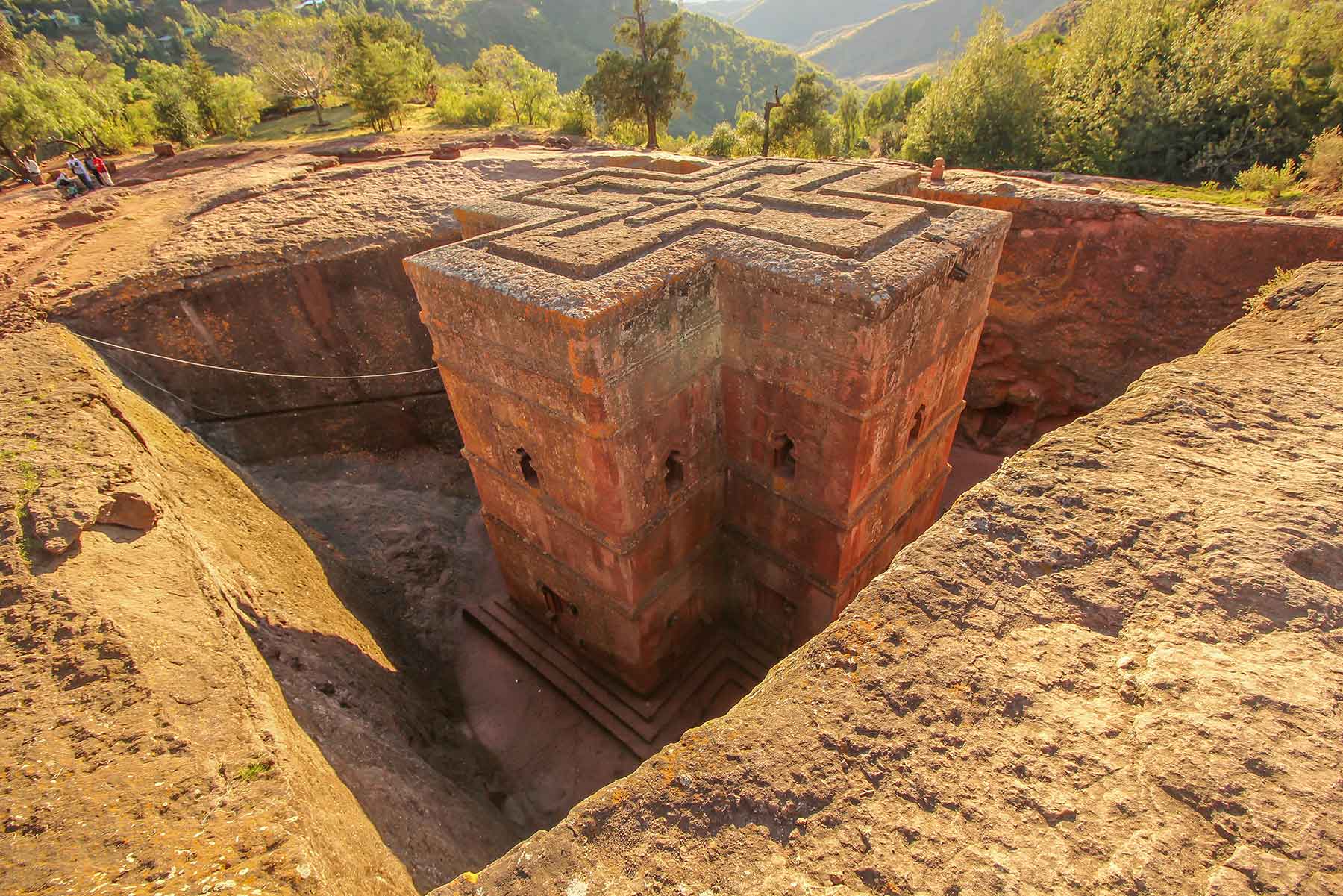
Lalibela
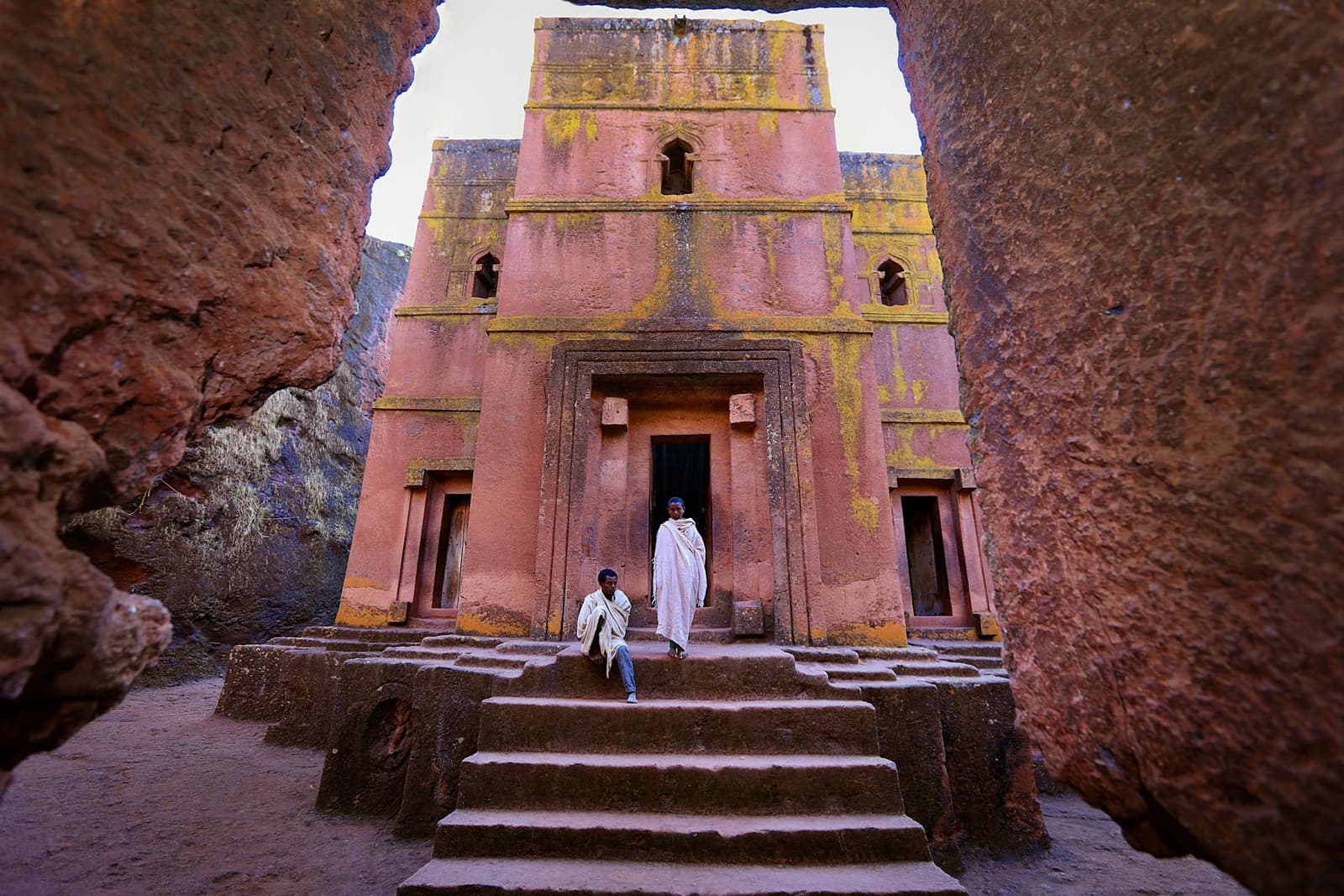
Eleven churches cut down into the rock, roof first, and still in use. The monasteries in the hills outside town are what most short visits miss.
Rock-hewn churches still in use, highlands above four thousand metres, a desert below sea level, and cultures that differ sharply from one region to the next.
Ethiopia is not an easy country to summarise. It has rock-hewn churches still in daily use, a highland plateau that climbs past four thousand metres, a desert lying more than a hundred metres below sea level, and dozens of languages spoken across regions that feel genuinely unlike one another.
It is also a country most travellers arrive at knowing very little about, which is part of why it rewards the trip. What follows is an orientation rather than a guidebook: what makes Ethiopia distinctive, which places tend to anchor a first visit, and how the regions fit together.
Ethiopia keeps the Ge'ez calendar — thirteen months, and a year that runs several years behind the Gregorian one. The day is counted differently too, which catches most visitors out at least once.
Arabica coffee originates in Ethiopia's south-western forests, and the coffee ceremony is still part of ordinary daily life rather than something staged for visitors.
At Lalibela, medieval churches were carved down into solid rock rather than built up from the ground. Eleven of them remain in use as working churches.
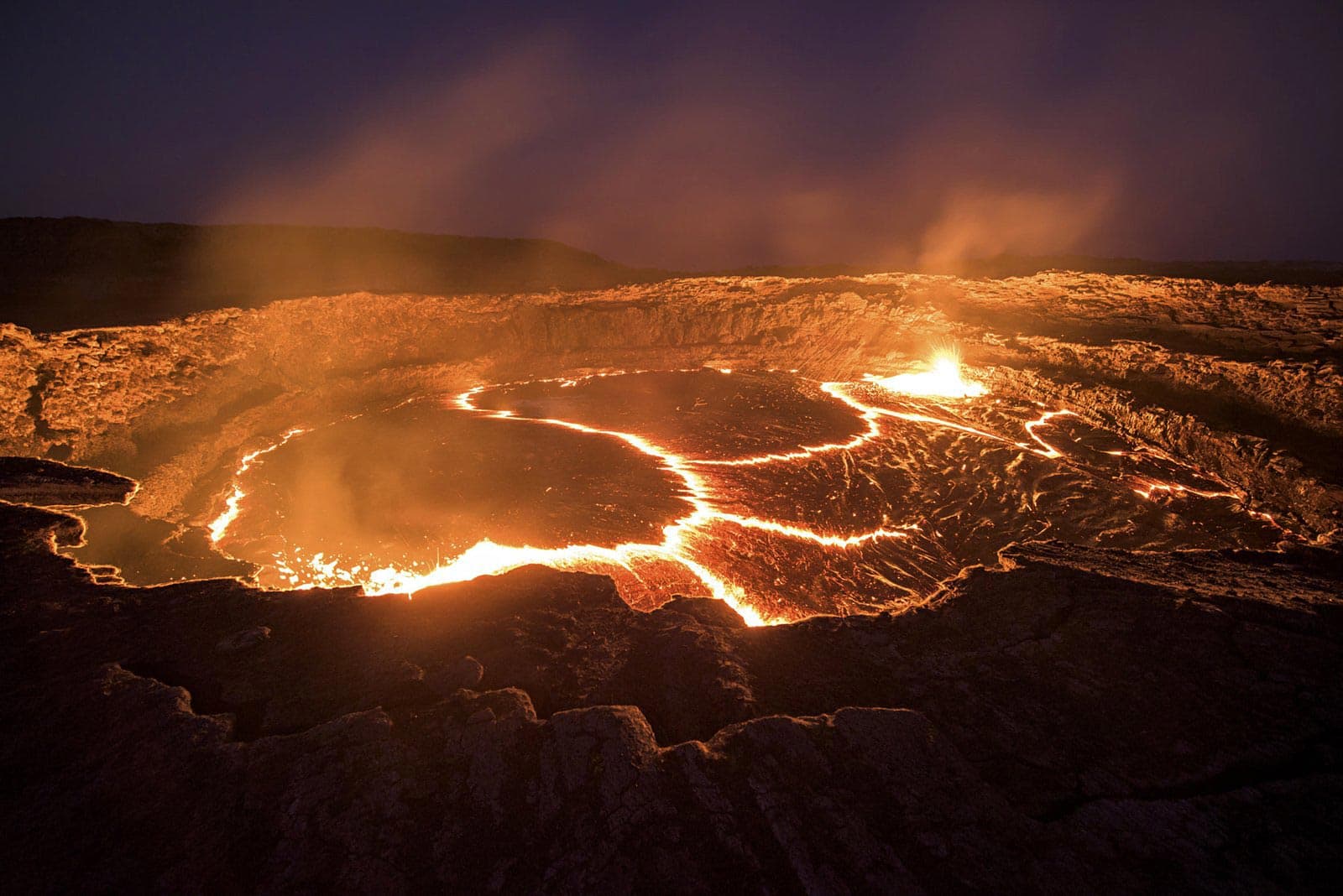
The Danakil Depression lies more than a hundred metres below sea level — salt flats, mineral springs, and a volcano with a persistent lava lake.
Where to go
Eleven churches cut down into the rock, roof first, and still in use. The monasteries in the hills outside town are what most short visits miss.
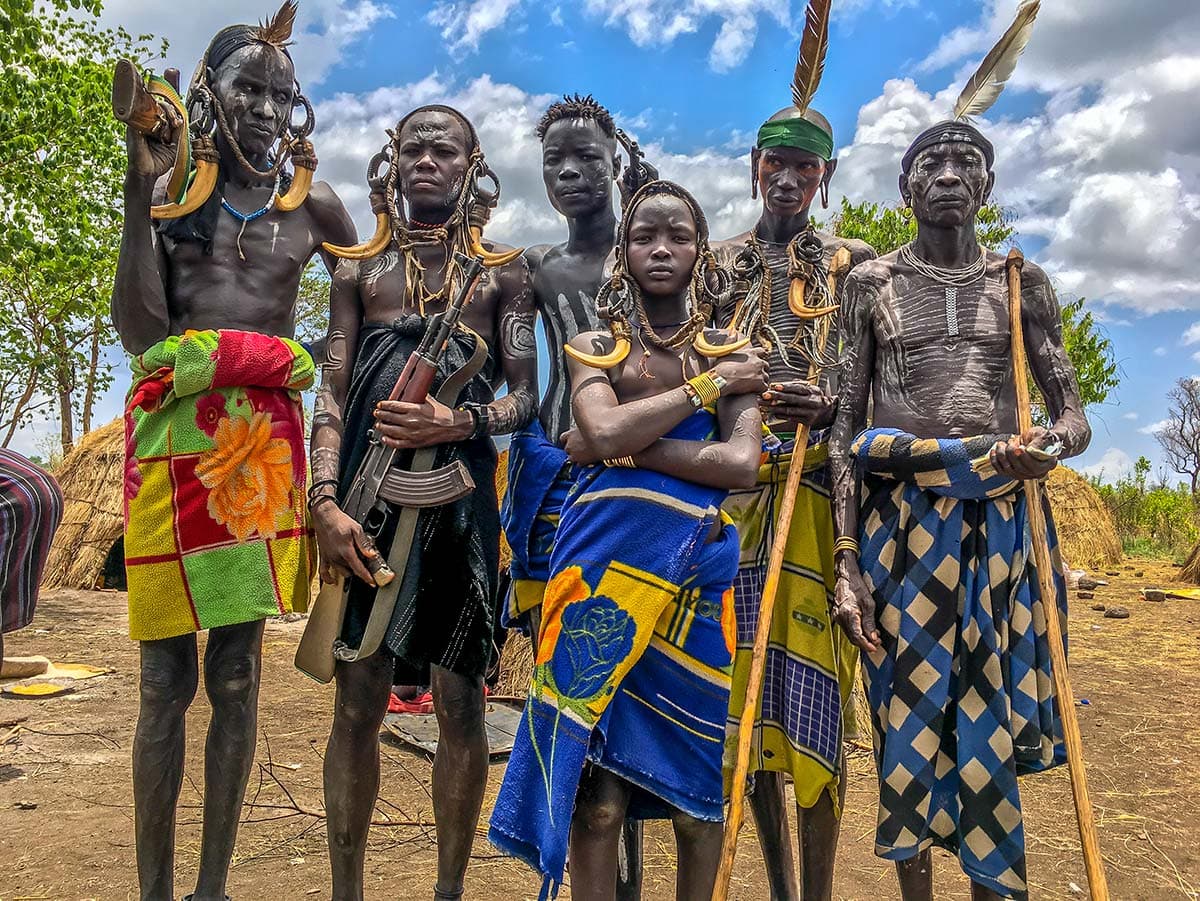
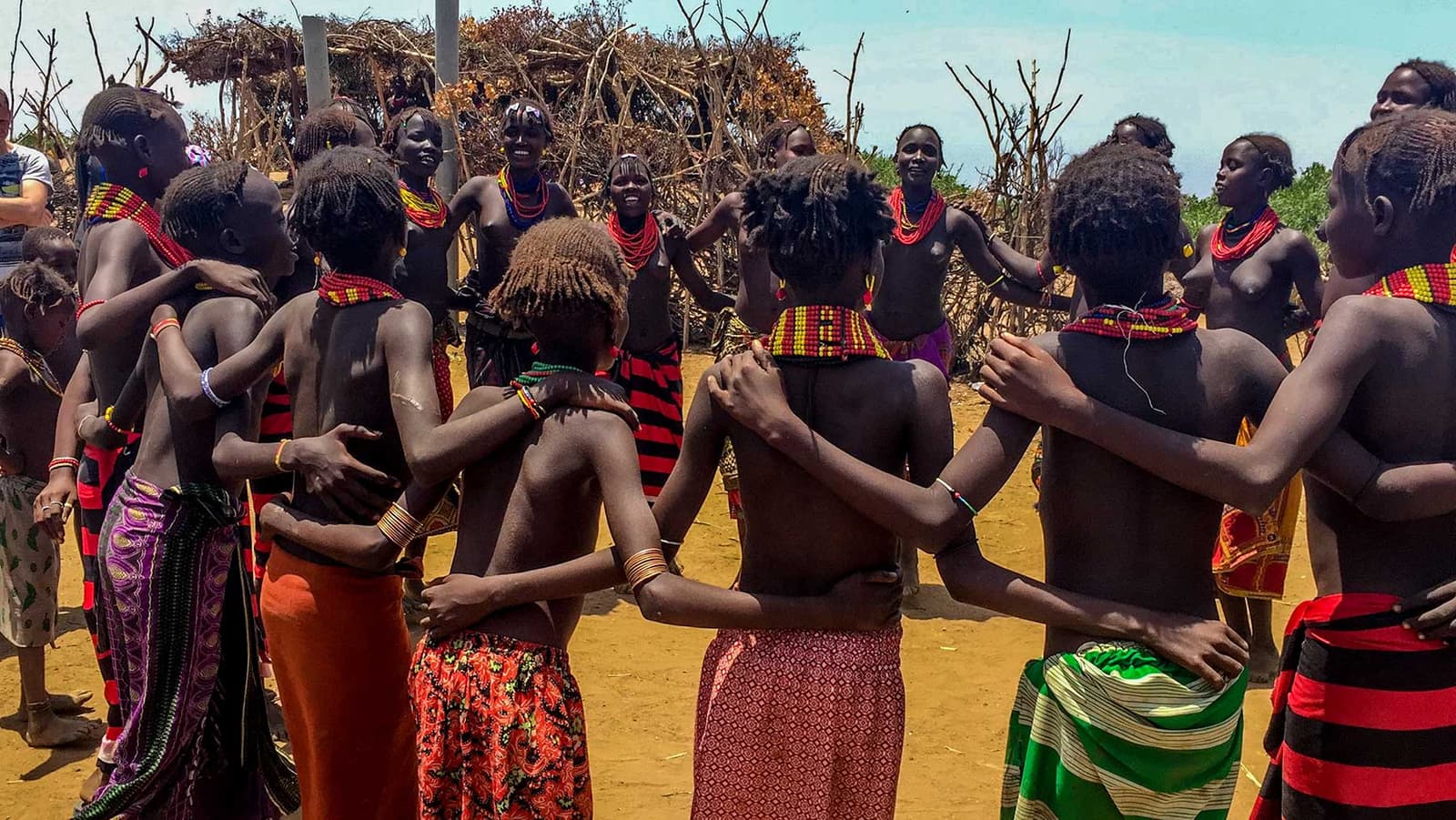
In the south-west, along the Omo River. Known for the communities living along the river and for weekly markets that draw people in from the surrounding country.
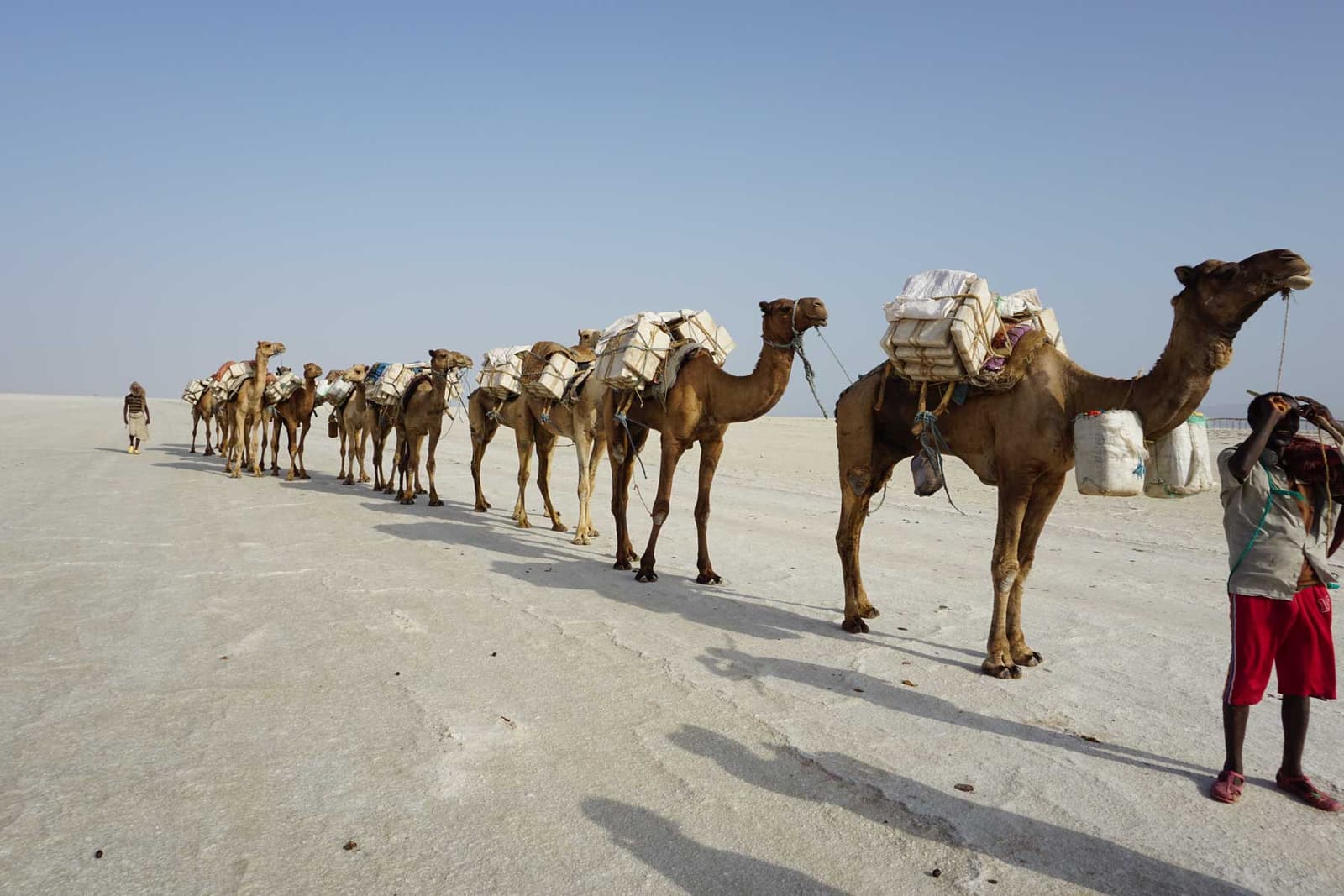
One of the hottest inhabited places on earth. Salt is still cut from the flats by hand and carried out by camel caravan, as it has been for centuries.
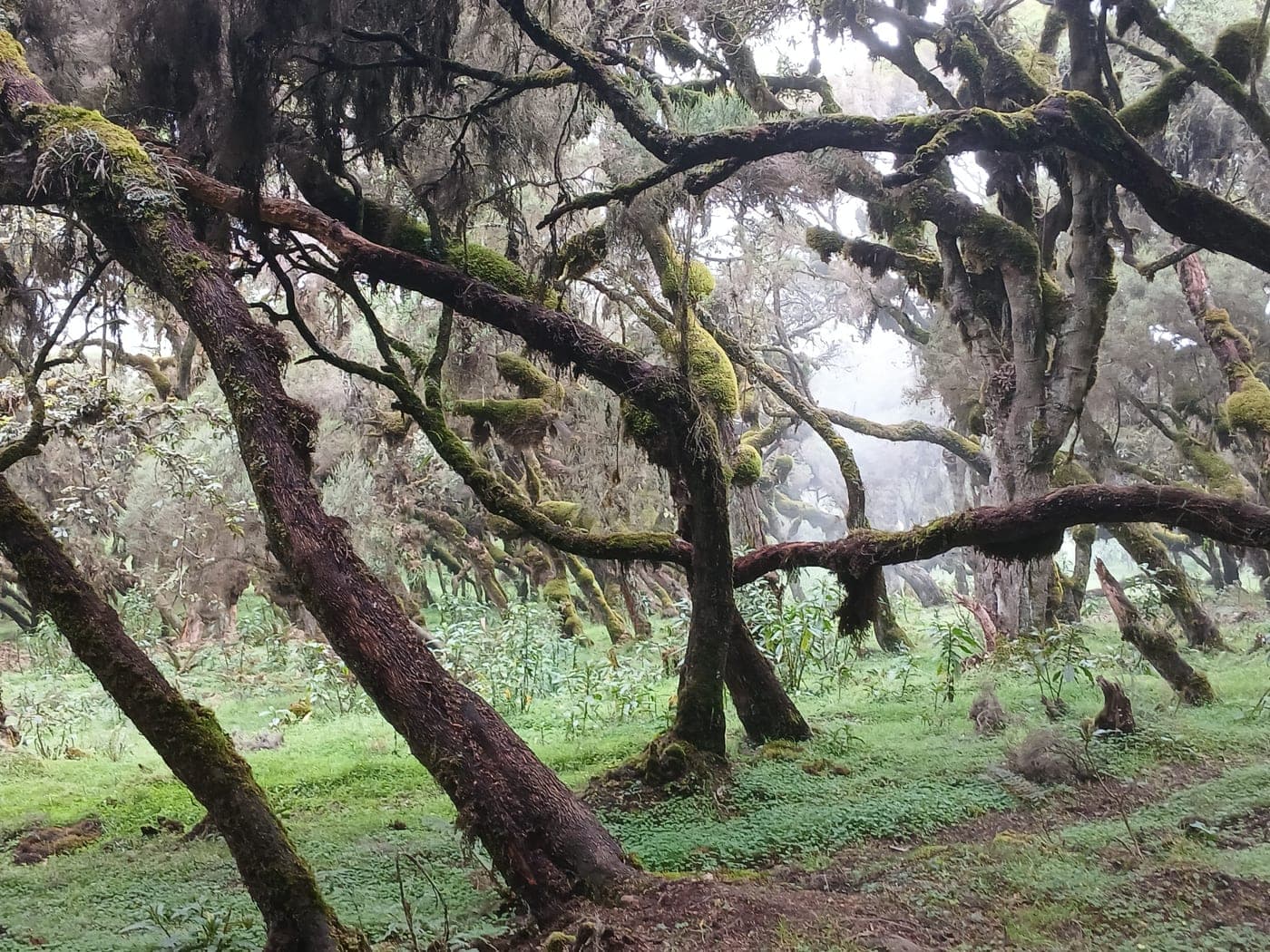
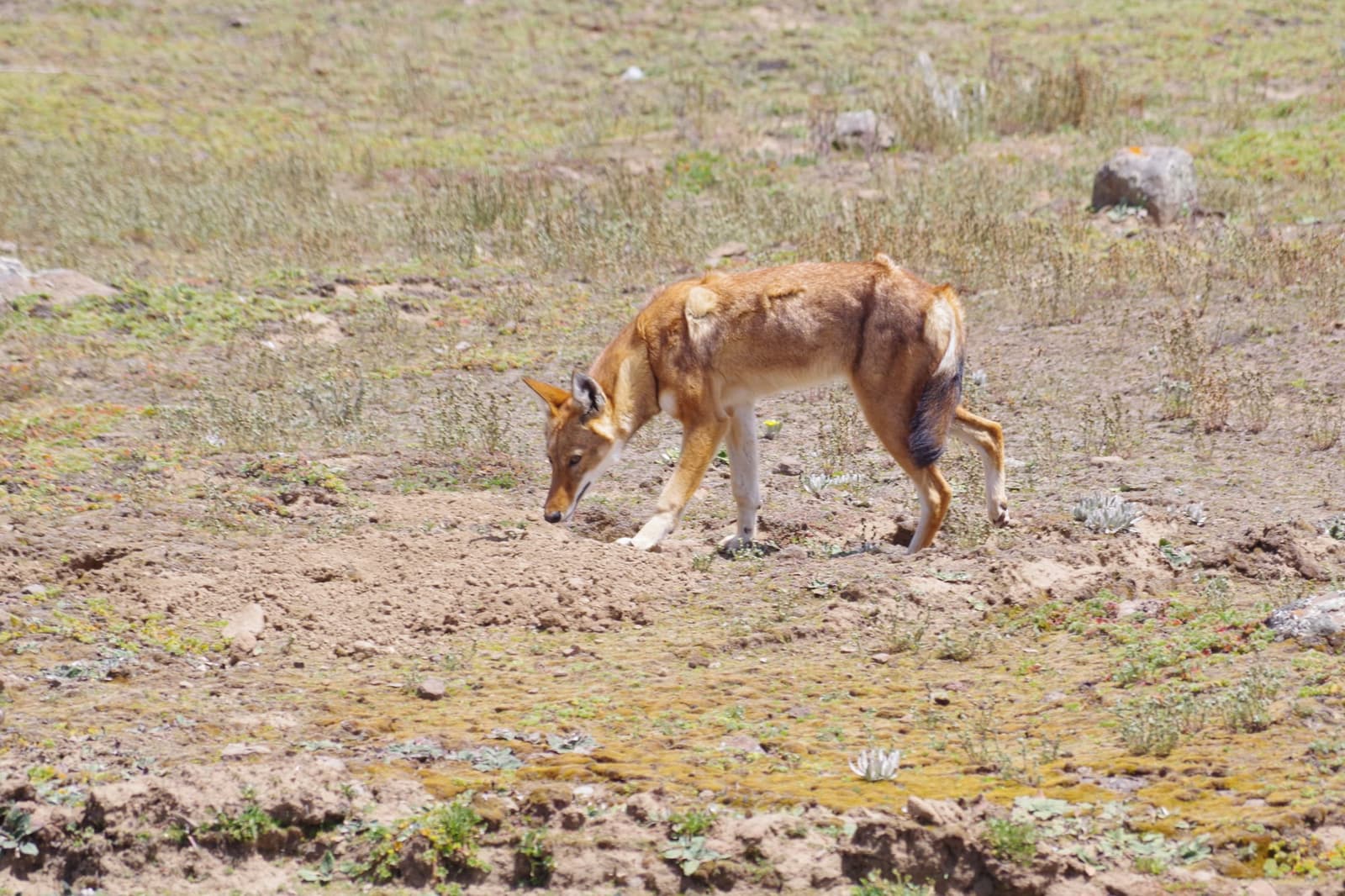
In the south-east, where an Afroalpine plateau runs above four thousand metres. The Ethiopian wolf survives here in greater numbers than anywhere else, and the forest below the southern escarpment still grows wild coffee.
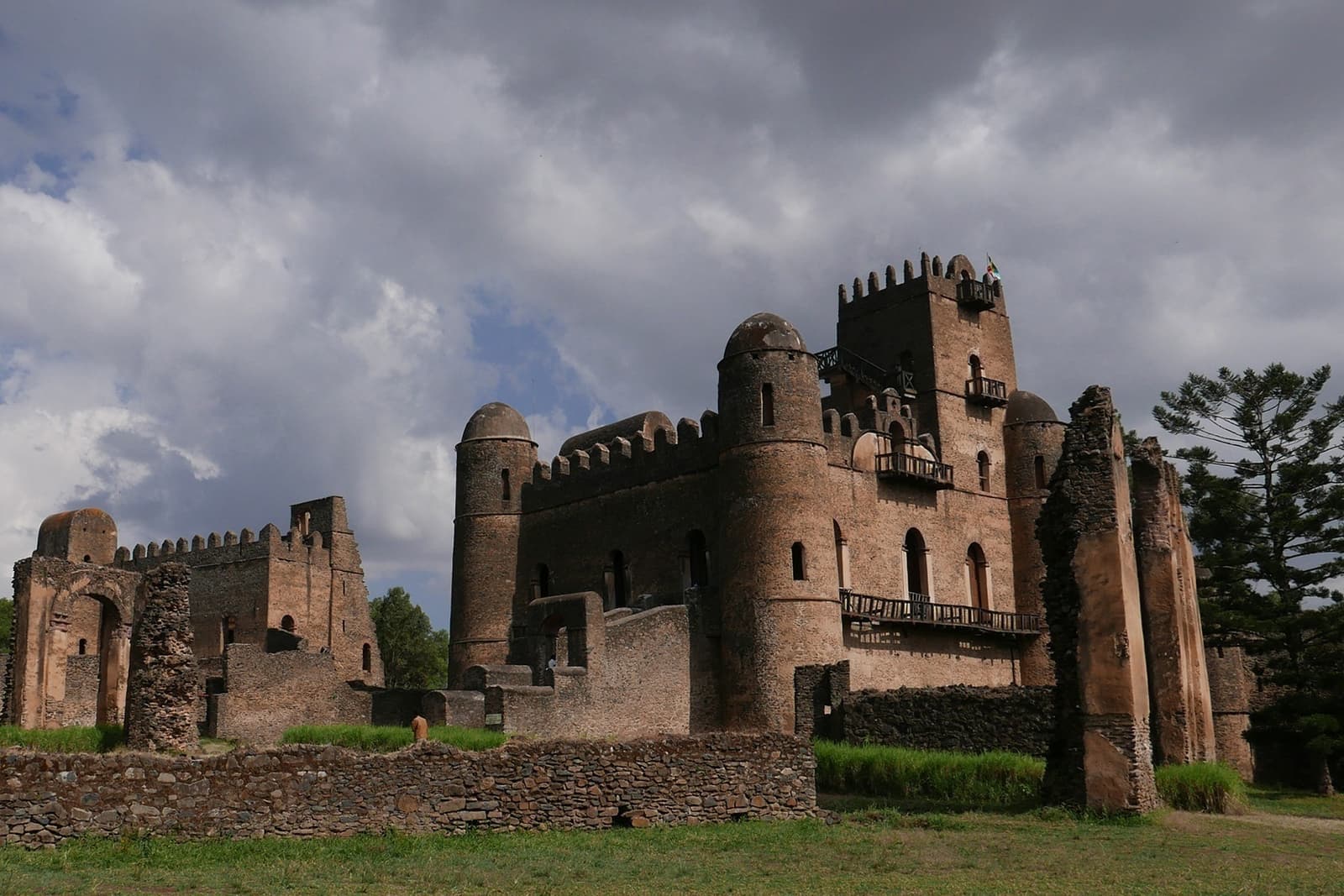
A former royal capital in the north, where a walled compound of stone castles sits in the middle of the modern town — unlike anything else in the region.
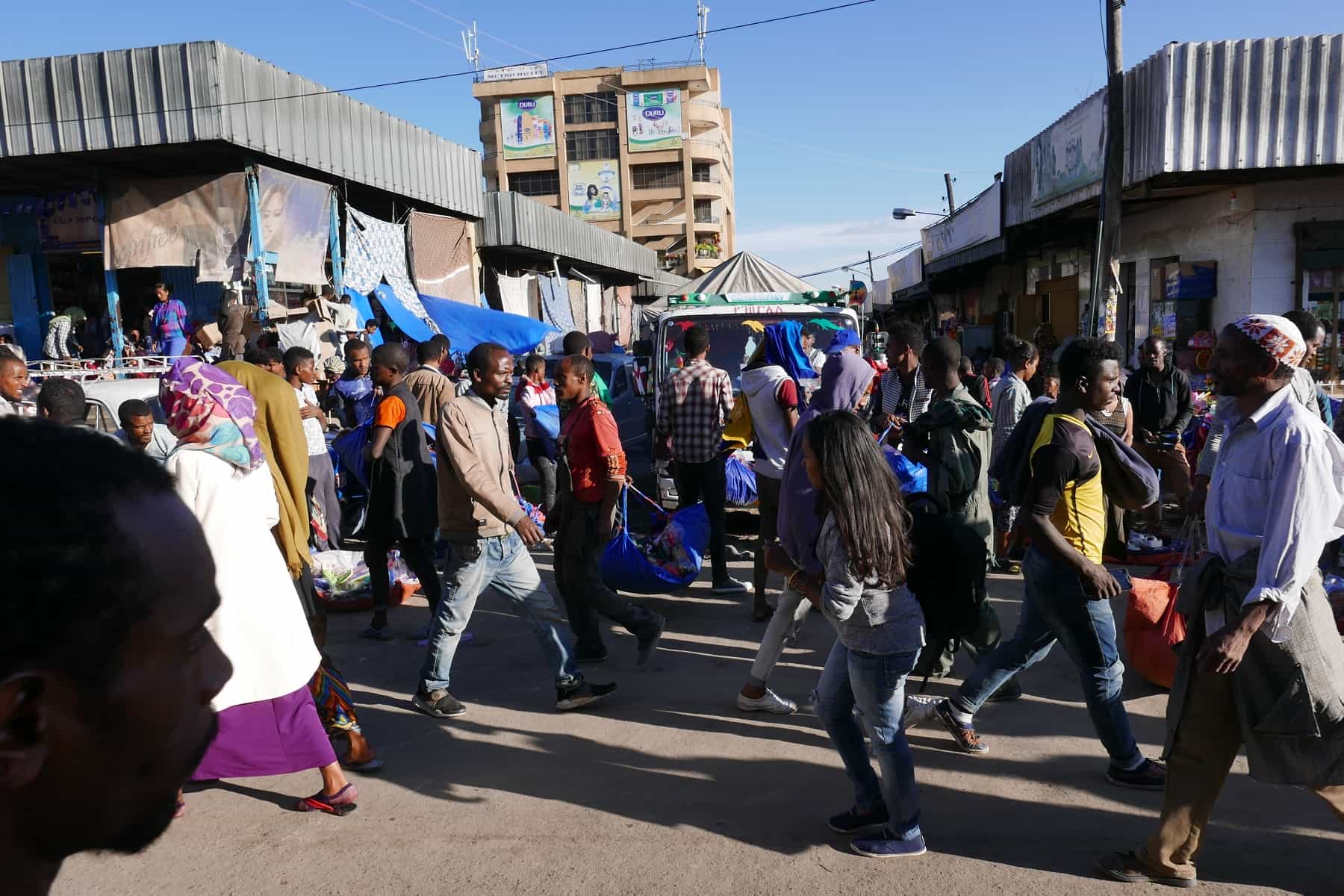
The capital, at around 2,300 metres — one of the highest in the world, and cooler than most people expect. Almost every trip begins and ends here.
Further east, the walled old city of Harar is one of Islam's historic centres in the Horn of Africa, and sits in a different direction again from both the north and the south. In the far north, the Simien Mountains break away in a long escarpment of cliffs and pinnacles, with gelada living along it in large groups.
Kinds of trip
We arrange private trips across the country. These are the kinds of journey we plan most often.
Ethiopia is not culturally uniform, and it is worth arriving expecting that. Dozens of languages are spoken across the country, and the north, south and east differ from one another in history, faith, food and daily life as much as they differ from anywhere abroad.
That variety is most of the reason to come, and it is also why a good local guide changes a trip. Someone who knows the languages and the etiquette can explain what you are looking at, arrange visits properly in advance, and tell you when something is not appropriate to photograph. Without that, a lot of Ethiopia stays behind glass.
If your dates are flexible
Ethiopia's religious calendar produces three occasions that are worth planning a trip around rather than stumbling into. Each belongs to a particular city, and each fills that city.
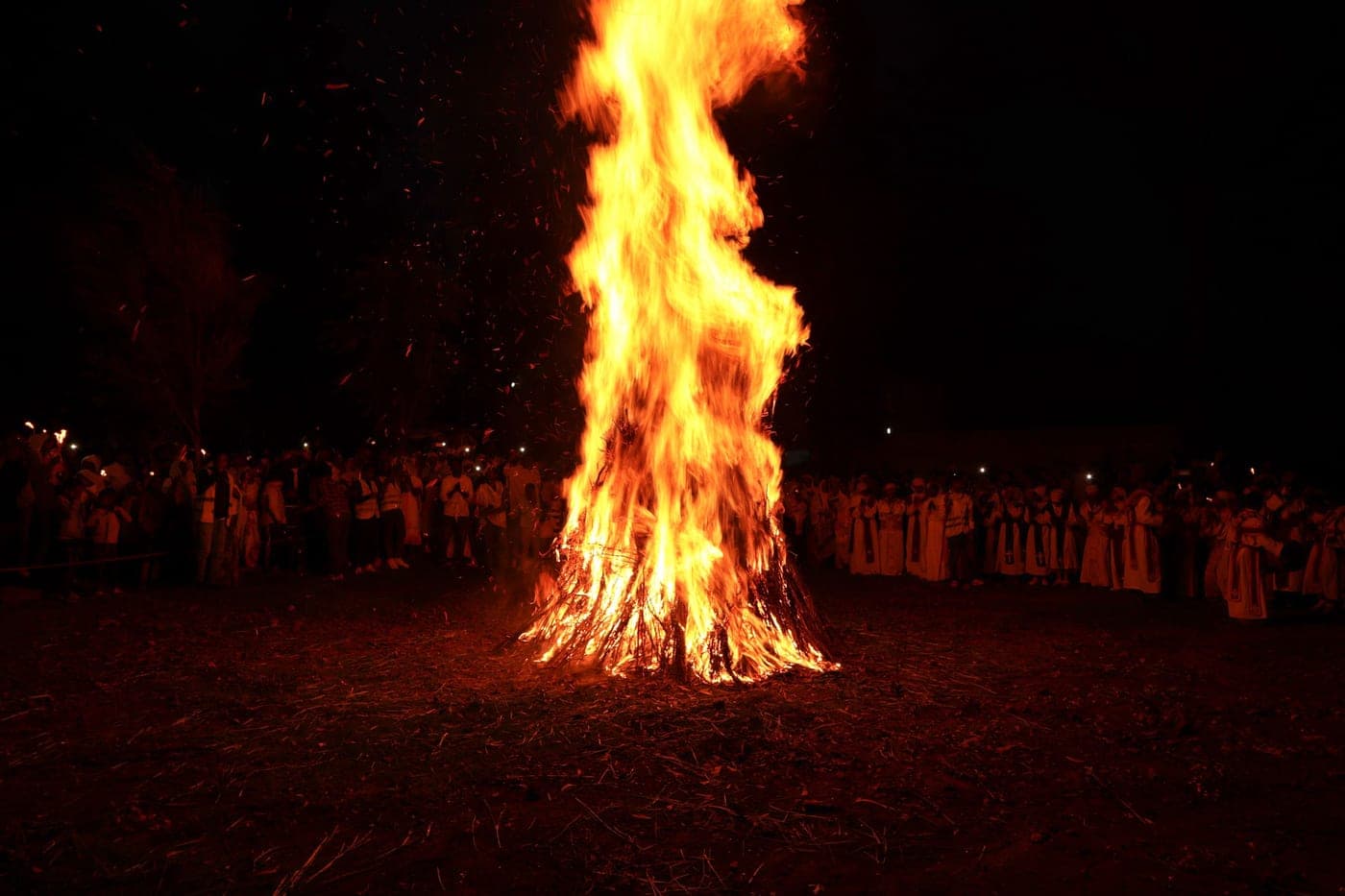
26 September, into the 27th · Addis Ababa
The finding of the True Cross
A tall conical pyre is built in Meskel Square and topped with a cross, and at dusk on the eve it is lit — the Demera. Priests in ceremonial robes process around it chanting, tens of thousands of people watch from the square, and the direction the burning pyre falls is read as a sign for the year ahead. The yellow Meskel daisies that flower across the highlands at the end of the rains are named for it.
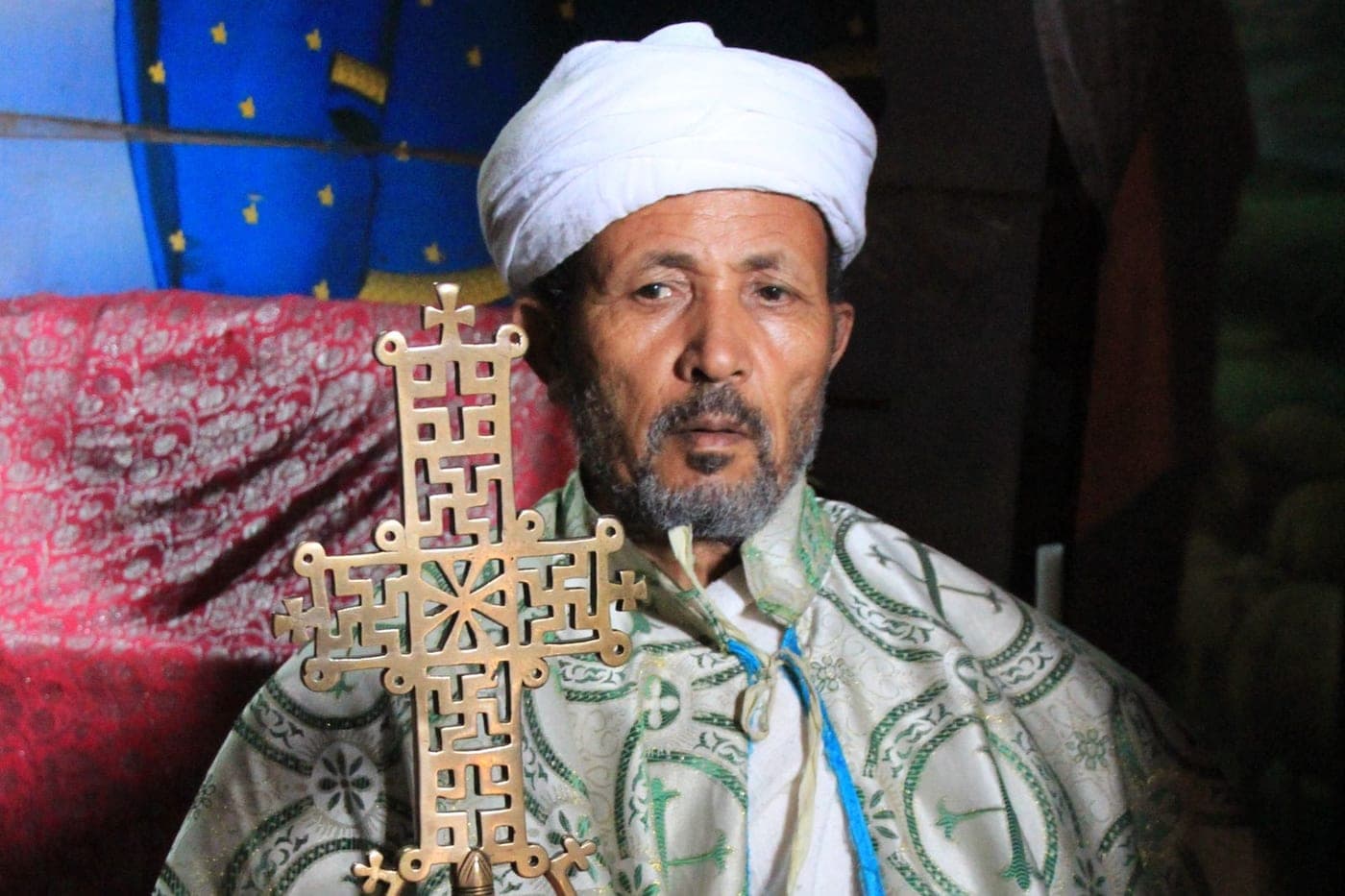
The night of 6 January, into the 7th · Lalibela
Ethiopian Christmas
Pilgrims walk to Lalibela in their thousands, many for days, and stand through the night wrapped in white shawls on the rock ledges above the churches. The vigil runs from evening until dawn — drums, chanting, and processional crosses moving between churches cut into the ground below. It is the one night of the year the town is genuinely full.
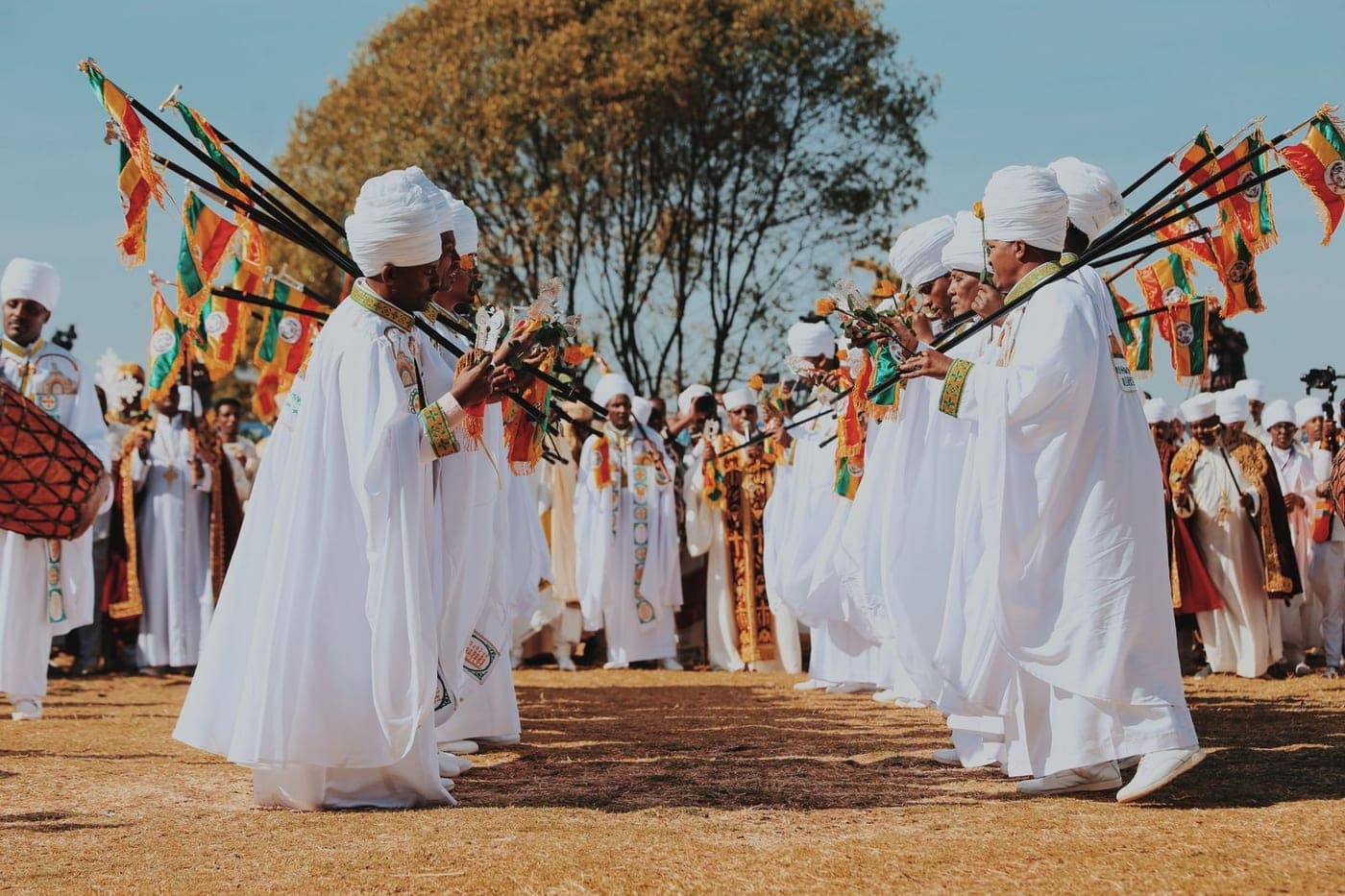
19 January, from the eve of the 18th · Gondar
Epiphany — the baptism of Christ
Each church's tabot, its replica of the Ark of the Covenant, is carried out under embroidered cloth and processed to water. In Gondar that water is Fasilides' Bath, a stone pool that is filled for the occasion. The blessing comes at dawn, and what follows is less a ceremony than a mass immersion — people going into the pool, and water thrown over everyone standing around it.
These dates are fixed in the Ethiopian calendar rather than the Gregorian one, so in some years each falls a day later. We do not run fixed festival departures — every trip we plan is private. If you want to be in Lalibela for Genna or in Gondar for Timkat, tell us when you enquire and we will confirm the exact date for your year and build the route around it.
Before you plan
Where to start
Browse the itineraries, or tell us what you have in mind and we will build a route around it.